
What should you do if your phone suddenly loses reception?
Treat it like a break-in. Call your mobile provider immediately from another device, then your bank. Where possible, prefer app-based authentication over SMS.
Legal status in the Hebrew source: a suspect was arrested on suspicion of fraud in August 2025, according to Cheshire Police. As of the Hebrew review on 22 October 2026, the site had not located a report of charges or a verdict. This translation reflects that dated account; it is not an update on the investigation. A person suspected or charged is presumed innocent unless convicted by a court.
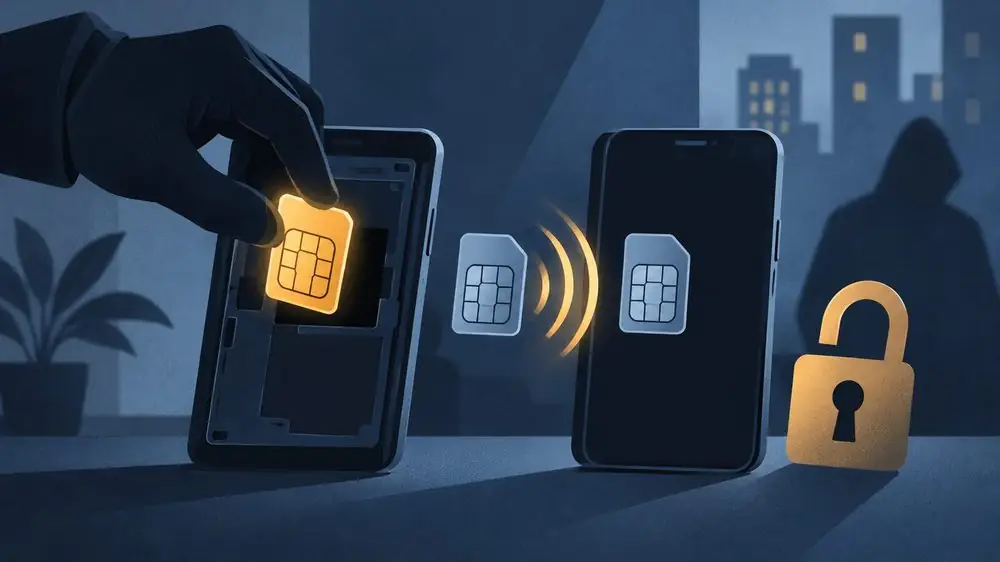
A 71-year-old businessman from Cheshire in the UK noticed one day that something was wrong with his phone. Behind his back, his number had already been transferred to another SIM card, without his knowledge or consent. Once the number moved, the bank's calls and messages went to the attacker, including two-factor authentication codes. The attacker took over the bank account and stole about £250,000. Cheshire Police, who shared the case as a public warning in the BBC report, arrested a 45-year-old suspect on suspicion of fraud. The detective leading the investigation explained the mechanism simply: taking over the number means controlling the security checks themselves. The scale is striking too. According to the UK's national fraud database cited in the article, nearly 3,000 SIM-swap cases were recorded in 2024, compared with just 289 the previous year.
What I see as an investigator
The important point is who was attacked. Not the bank. The attacker went to a weaker link in the chain, the mobile provider, and gained the key to the bank. This lesson recurs in many scams: strong security at one end does not compensate for weakness at another. The bank can encrypt, monitor and authenticate, but if your identification depends on a code sent to your phone, whoever controls the phone controls you.
The early warning here is brief and dramatic: a sudden, unexplained loss of reception. Not a dead zone or a frozen device, just reception disappearing. Once your SIM has been swapped, your phone is quiet because someone else is very busy with your number. The jump from 289 cases to almost 3,000 within a year tells me attackers found something that works, and will keep using it.
Key takeaways
Reception suddenly gone? Treat it like a break-in: call your mobile provider immediately from another device, then your bank. Where possible, prefer app-based authentication over SMS. Set a family code word for sensitive calls. It costs nothing and can be worth a lot.
The question I would ask as an investigator
If the customer was chosen in advance, what outward signs could point to a worthwhile account, and where in the chain, from the mobile provider to the bank, could that selection be detected early?