
Status in the Hebrew source: a journalistic investigation by The Straits Times. As of the Hebrew review on 22 October 2026, the site had not located confirmed information about legal proceedings. This translation reflects that dated account; it is not an update on the case. A person suspected or charged is presumed innocent unless convicted by a court.
Alger Kwak, a 49-year-old freelance violinist in Singapore, opened what looked like an ordinary letter from the land authority. His Katong home, bought in 2008 and fully paid off in 2019, was involved in an application he did not recognise: a lender had registered a claim over the property. When he called to ask, he learned that someone had presented an identity card in his name and applied for a loan. Not just any loan: $2.9 million secured against the house. He told The Straits Times that they had been just one small step from the money, and that he was sure they would have disappeared with it.
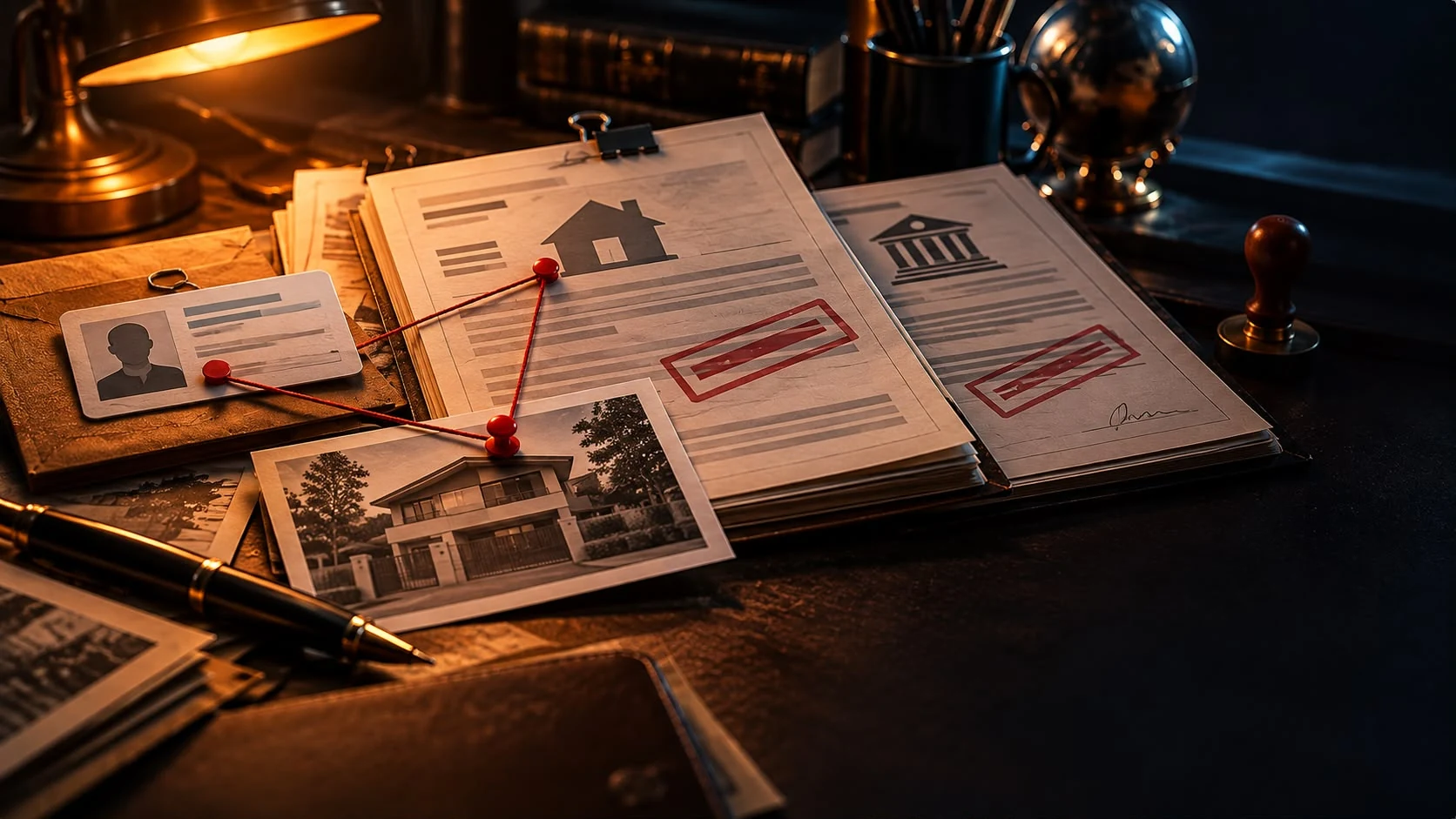
The investigation uncovered a carefully prepared set of documents: a forged identity card with a completely different person's photograph, fabricated proof of annual income of $170,000 from two companies registered in Kwak's name without his knowledge, a law firm handling registration of the claim, and another firm hired to obtain a replacement title deed. An unusual incident had taken place earlier. On 1 April, a group booked his house, which he rents out for filming, for a three-hour production. During the "shoot", his partner noticed a woman moving away from the group. Asked what she was doing, the woman admitted she was a property valuer hired to measure the house. Two days later, the land-authority letter arrived. Kwak was not alone: another victim, Alice, a pseudonym, discovered identity theft using the same method, including a forged document with her photograph but the name and address of the matriarch of Kwak's family.
The account described investigations by police, the land authority and the companies registrar. The claim over the property was cancelled, and Kwak kept his home.
What I see as an investigator
This is a classic example of an attacker building a set of documents to carry out a fraud. Look at the stages. First, infrastructure: companies in the victim's name and proof of income, so the application looks financially sound. Then official paperwork, a replacement deed, obtained through a legitimate channel. Then a real valuer measures the property, because that too belongs to the normal lending process. Each step alone is ordinary, even dull. Together, they create an application that looks clean. As an investigator, I look for the weak link in the approval chain. Here there were several in succession: the registrar, lawyers and lender. One person looking at the forged document's photograph, "a completely different person" according to Kwak, could have brought the fraud down.
Key takeaways
Even a fully paid-off property can secure a loan. A registry or authority letter about a registration you did not request is not routine bureaucracy. It is a warning. Open it immediately, check immediately, report immediately. Check the companies register too for a company registered in your name that you did not establish. It takes minutes, and in this case it helped build the attacker's file.
The question I would ask as an investigator
Why was physical access to the house needed for three hours if everything was done through documents? What can be gathered on site that paperwork does not contain, and what does the group's division of roles tell us about its level of organisation?